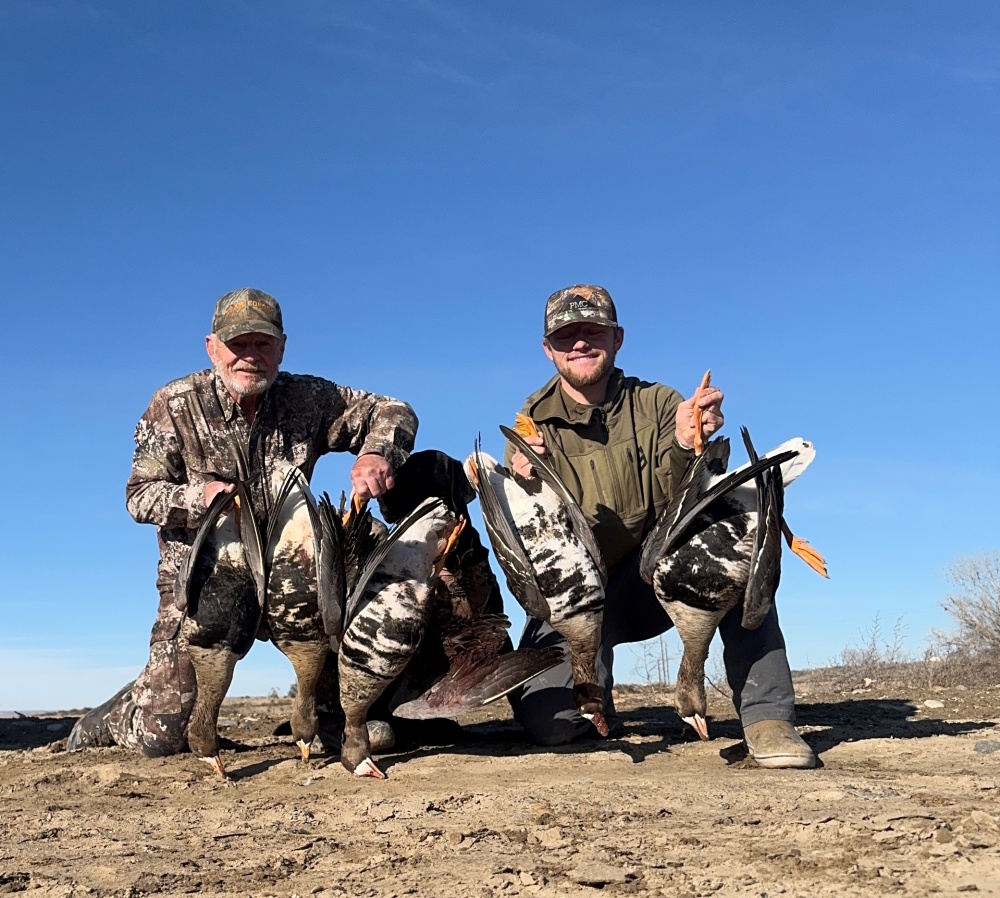
Every once in a while, I venture off the chukar path and try something different. When my grandson, Conner, invites me along, I know it’s going to be fun. He’s a lot like Dustin Stevenson and does it all. And at the age of 23 he’s already good at everything.
Waterfowl hunting is probably what Conner is best at. But rather than brag about him, I need to talk about his dog. I don’t know a heck about waterfowl dogs, but Blaze, a black Labrador, has to be about as good as it gets. There must be as much enjoyment in training a duck dog as there is in training a chukar dog. I wish I had had my camera, just to film him.
It was impressive to just watch him hide under the brush and not move a muscle. The only thing that moved was his eyes. All I had to do was watch his eyes, and I knew where the birds were. Just like a chukar dog on point, he seemed to know the importance of staying motionless. But once the shooting is over, he becomes a retrieving machine. There was one cripple that he chased for at least 200 yards. The speckled goose could fly just fast enough to keep out of the reach of Blaze’s jaws. The corrugated field gave the goose that edge. Finally, there was a cloud of dust, and Blaze was on his way back to the blind with the live goose.
And then there was the blind retrieve. Conner shot one speckled goose to the right, and Blaze was on it. I had shot one in the opposite direction. Neither Conner nor Blaze saw it go down, and after Blaze retrieved the first bird back, Conner asked where my bird went down. I pointed in the direction, and Conner gave the dog some hand signals, and soon that goose was in the blind. I could just sense the excitement in him.
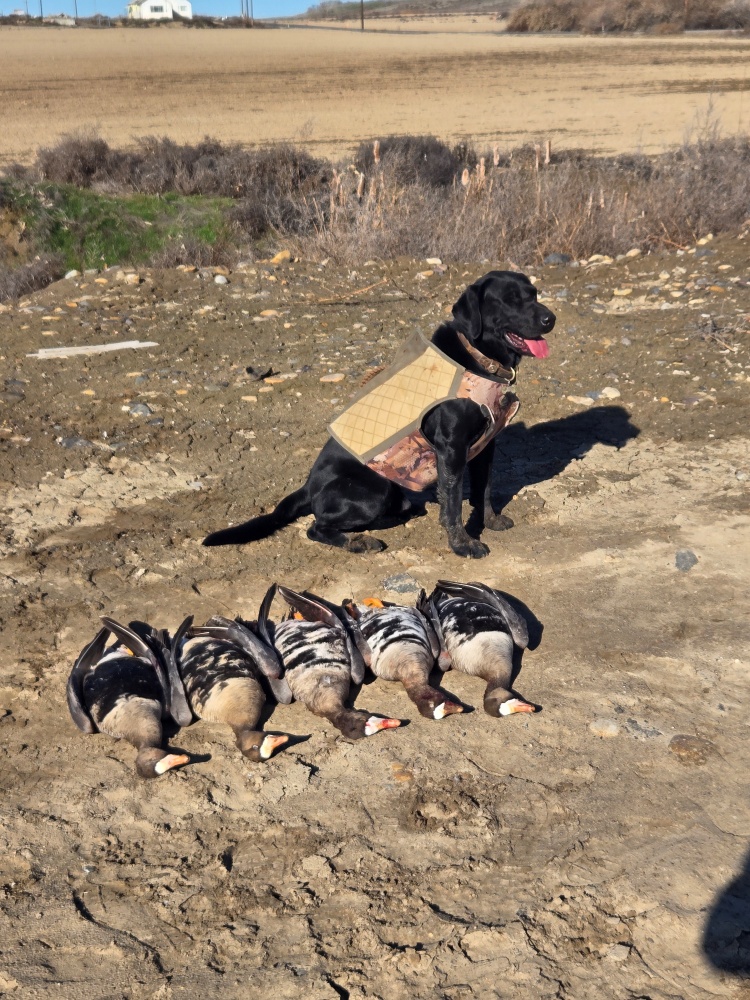
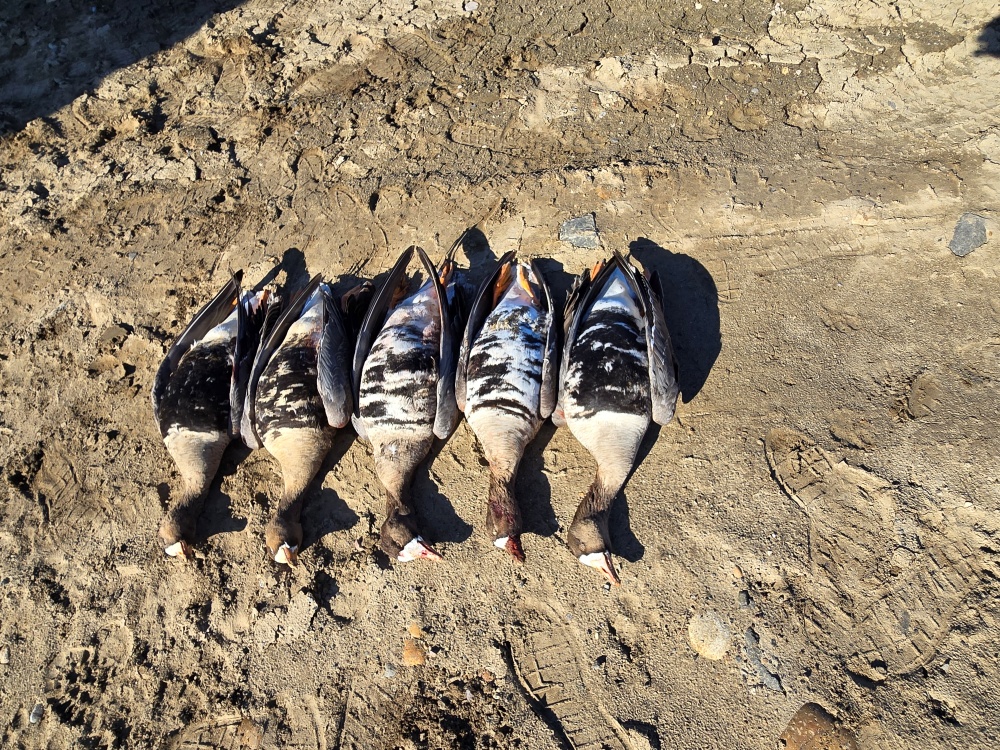
As far as the speckled goose hunting, I had never been and don’t recall ever seeing one. But it was interesting to see what good waterfowlers look for. Conner was picking out the goose with certain markings. He picked the bird to the left out as they passed over us. All I see is a bunch of geese. When the specks made their final pass, Conner dropped the one he wanted. I just wanted to shoot any of them, but the over and under failed me.
It was interesting to see the wide variation of spots or specks or whatever they are.
I’ve never had that many geese circling overhead calling. It was almost deafening. Most of the time, they saw something they didn’t like and left. But they stayed long enough to give me cramps as I crouched in the ditch with brush covering me. But just like chukar hunting, watching the dog do his thing made everything worthwhile.
.
 The Reigning Chukar Champions
it’s actually a much more involved process to train a retriever to that level than our pointing dogs . Retriever trainers are generally much higher cost per month than pointing dog training
especially since very few of us chukar guys break are dogs to be steady to wing and shot . I saw that about us guys that strictly hunt and don’t field trial
love a good waterfowl dog
LikeLike
How right you are. I must admit that Blaze is not trained to the trial level. I don’t think he would take a straight line like I’ve seen the really good dogs do. And I’m sure he would probably fail at other important tasks required. Conner trained his dog, and in the end, he follows directions and will always get his bird. You’re also right about upland dogs strictly trained for hunting and don’t participate in field trials. I’ve watched several of those field trials and come home very impressed. I even trained one of my past dogs, Riley, to stop to wing and shot. Breaking him of not stopping to flush was much harder than training him to stop at the flush. My problem began when the birds would flush from 300 yards away, and not because Riley did anything wrong; he would stop. Most of the time, I was not close enough to even know birds had flushed wild. I had to go all the way up the steep slope to a point with no birds. It happened so many times that I didn’t see a need for it. But it is beautiful to watch. Watching dogs do what they love to do with their master is always a fun thing to see.
LikeLike